
April 10, 2025
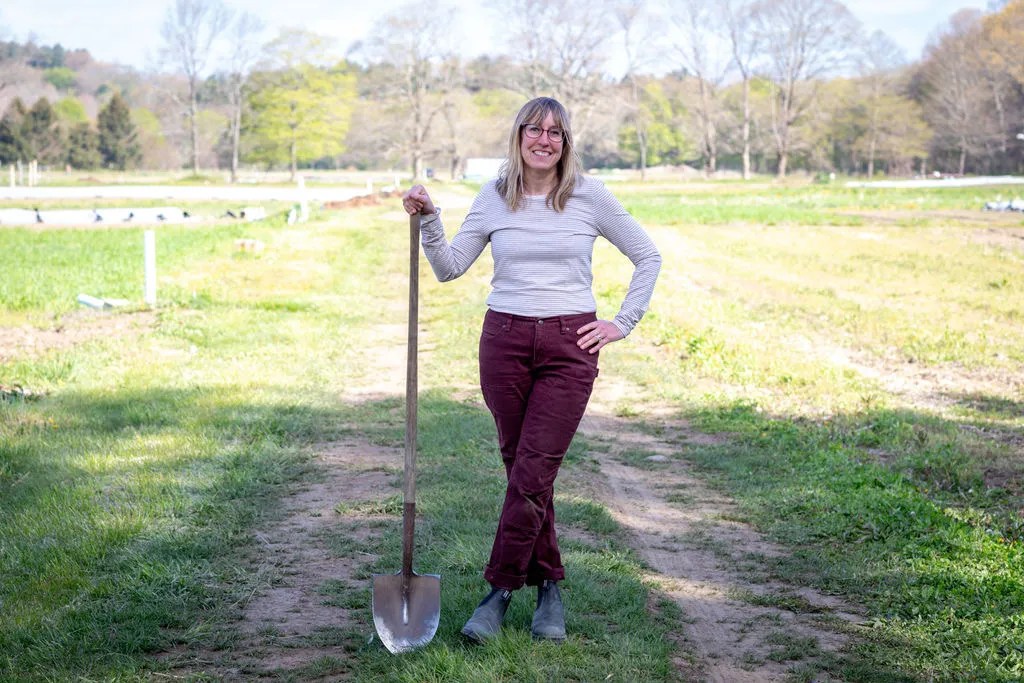
As spring emerges from the depths of winter, the anticipation of sunny days and blooming flowers fills the air. Few know this excitement better than Carolyn Whipple Fraser, owner of Whipple Bee Farm in Marblehead.
While most people associate flower farming with spring and summer, Whipple Fraser grows tulips indoors — even in the dead of winter.

For her, flower farming is a year-round passion — one that began with her family’s deep appreciation for the outdoors, especially her father, who was a hobby beekeeper.
“I’m fortunate to have grown up with parents who had an appreciation for the outdoors and for gardening,” she said. “The community has always been a part of who I am.”
As she got older, Whipple Fraser became involved in community gardens. But when the pandemic hit, she found herself reflecting on what more she could do. The answer always led back to farming.
Determined to learn more, she began volunteering with the New Entry Sustainable Farming Project, a program through Tufts University. She eventually found herself at Moraine Farm in Beverly where she discovered their farm business school, which offered mentorship and courses like crop management.
Inspired, she applied.
“It was a leap I felt I needed to take,” she said. She was accepted and Whipple Bee Farms opened to the public in 2021.
After three years at Moraine Farm in Beverly, Whipple Fraser faced a new challenge: securing land in Marblehead.
One day, while purchasing flowers at Five Foot Flower Farm, 15 Peach Highlands in Marblehead, Whipple Fraser shared her dilemma with owner Susan Greco. In true Marblehead community spirit, Greco offered a partnership, providing space for Whipple Bee Farm to grow flowers. (Whipple Fraser partners with other local farms that give her growing space.)
“Working with Carolyn has been an unexpected joy,” Greco said. “We were very excited to help out another flower farmer and happy to share our land.”
Greco and her husband, Jan, opened Five Foot Flower Farms “as salvation” from the COVID-19 pandemic in 2020 with a piece of property across the street from their home in Marblehead.

After planting for the first time in May of 2020, they decided to do a pop-up bouquet sale on the weekends. A cyclist, Greco decided to donate the proceeds to the Pan Mass Challenge, an organization raising funds for cancer research and treatment at Dana-Farber Cancer Institute.
“It was a safe place to hang out and just be with beauty.” Greco said. “People enjoyed purchasing the bouquets and giving back. It really was a win win.”
Farmers today face significant challenges, including limited land access and extreme weather. But according to Whipple Fraser, it’s the sense of community that keeps them going.
“It’s so important these days,” she said. “Being able to hear from others about what has worked for them, hearing about their challenges and then sharing what you know is how everyone gets through those challenging times.”

One of Whipple Fraser’s most memorable moments came last fall at The Tulip Workshop, an on-the-farm training in Vermont. There, she learned from industry experts Emily Von Trapp of Von Trapp Flowers in Vermont and Linda D’Arco of Little Farmhouse Flowers in New York about the science and profitability of growing tulips indoors. These farmers cultivate between 100,000 to 200,000 tulips between December and May.
So, how can tulips grow in the winter? It’s all about replicating natural conditions, Whipple Fraser explained. Tulips require a period of cold to bloom. By mimicking the low soil temperatures of winter, farmers can “wake up” the flower in the spring with warmer soil and air.
“Learning from people who have done it successfully is an important part of the equation for me.” Whipple Fraser said. ”The community that they foster for not only the on farm experience, but through their continued education.”
Since immersing herself in the world of flowers, Whipple Fraser has discovered something even more profound than the science of farming: the emotional connection people have with flowers.
“When I first started this venture a few years ago, I really was not aware of the stories and the connection that people have to flowers.” she said. “It has been an absolute privilege to hear and understand how flowers are so meaningful in different ways.”
To learn more about Whipple Bee Farm and where you can purchase its flowers, visit whipplebeeflowerfarm.com.
Lucy Kratman is a student at Endicott College studying journalism.
 Massachusetts News Service
Leave a comment